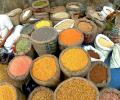
After climbing to the highest level in more than five years to 4.7 million tonnes in FY24, India might import fewer quantities of pulses this financial year at 4-4.5 mt on the back of good monsoon and higher domestic production, Bimal Kothari, chairman of India Pulses and Grains Association (IPGA), said in New Delhi on Friday. Kothari was addressing reporters on the sidelines of a seminar on pulses titled "Bharat Dalhan-2024".

In what could come as a piece of good news, hunger in India - as measured by the Prevalence of Undernourishment (PoU) by the United Nation's Food and Agriculture Organisation (FAO) - has come down from 16.6 per cent of the population in the 2020-2022 to 13.7 per cent in 2021-23, the latest report on the State of Food Security and Nutrition in the World (SOFI 2024) showed. This means that around 39.3 million people have come out of undernourishment between the two periods, NITI Aayog member Ramesh Chand said on Tuesday.

'With the deployment of a higher degree of mechanisation, awarding contractual mining to MDOs and operational efficiency, we feel confident of achieving the desired target.'

Several BJP-backed state governments have unveiled schemes targeting the poor, women, farmers and students, following the party's setback in the Lok Sabha polls.

Alloting more funds for MNREGA and PM-KISAN could wipe out the entire additional money that the Centre may have for FY25.

Milk supplies could improve with the monsoon, provided the rains are not excessive.

As a panel of senior ministers deliberates on the need to review curbs on exports of some rice varieties, data shows that since outbound shipments saw restrictions in July-August last year, the non-basmati segment has suffered more than basmati exports. Sources said the panel is expected to soon deliberate on a few suggestions to ease the export curbs on some rice varieties due to higher-than-required stocks in the central pool. The panel, some observers feel, may also postpone the decision to ease the export curbs till a firm picture emerges on the latest kharif paddy sowing.

In seeking visa approvals for engineers from China, the company has reasoned that India lacks the expertise to set up such a solar facility.

Three years after India declared its goal to become a net-zero economy by 2070, the policy design for achieving the target has begun, with the NITI Aayog forming dedicated multi-sectoral committees to prepare a transition plan. In 2021, India joined a select group of nations that set a target year for becoming net-zero carbon economy. At COP26 in Glasgow, Prime Minister Narendra Modi outlined a five-pronged 'Panchamitra' climate action target for India and committed to a net-zero target by 2070, joining nations like the US, the UK, and China.

Since 2008, the Bureau of Energy Efficiency is running a star rating programme, under which electric equipment are rated according to their efficiency. This in turn helps the consumers save electricity.
Rising energy demand could tilt India's energy basket towards fossil fuels from coal to oil, natural gas.

Increased production of pulses, oilseeds, and cereals will help boost domestic supplies and contribute to keeping inflation low in the coming months.

'The expeditious enactment of labour codes and strategic measures to bridge the skills jobs gap are critical.'

The heat index in major metro cities in the country has majorly risen since 2010 compared to a decade earlier.

The Met department blamed the malfunctioning of sensors kept at the Automated Weather Station for the gaffe.

The rains after arriving over Kerala will quickly cover Tamil Nadu and Karnataka, but then might slacken a bit, which could delay its arrival over Northwest India.

High vegetable prices are expected to keep food inflation firm in the months to come.

The government has extended the interim approval given to plant protection companies for use of drones for spraying specified pesticides. The approval has been extended for one more year starting from April 18, 2024. All other terms and conditions for the use of drones for spraying plant protection chemicals including the standard operating procedures etc. will remain the same.

It is in more than a decade that the IMD has predicted 'above-normal' rains in the country.

The Food Safety and Standards Authority of India (FSSAI) has commissioned a quality check on MDH and Everest products. This follows complaints that several popular spice mixes of the two leading brands contained traces of ethylene oxide more than the permissible levels, official sources said. This move by FSSAI comes after Hong Kong and Singapore recalled variants of the two masala majors' products in their countries.
 © 2026 Rediff.com - Advertise with us - Disclaimer - Privacy Policy - Sitemap - Feedback - About us - Terms of use - Grievances